Benefits of Cloud Accounting for UAE Businesses
Published On: 21 April 2026
By Admin
Benefits of Cloud Accounting for UAE Businesses
Published On: 21 April 2026
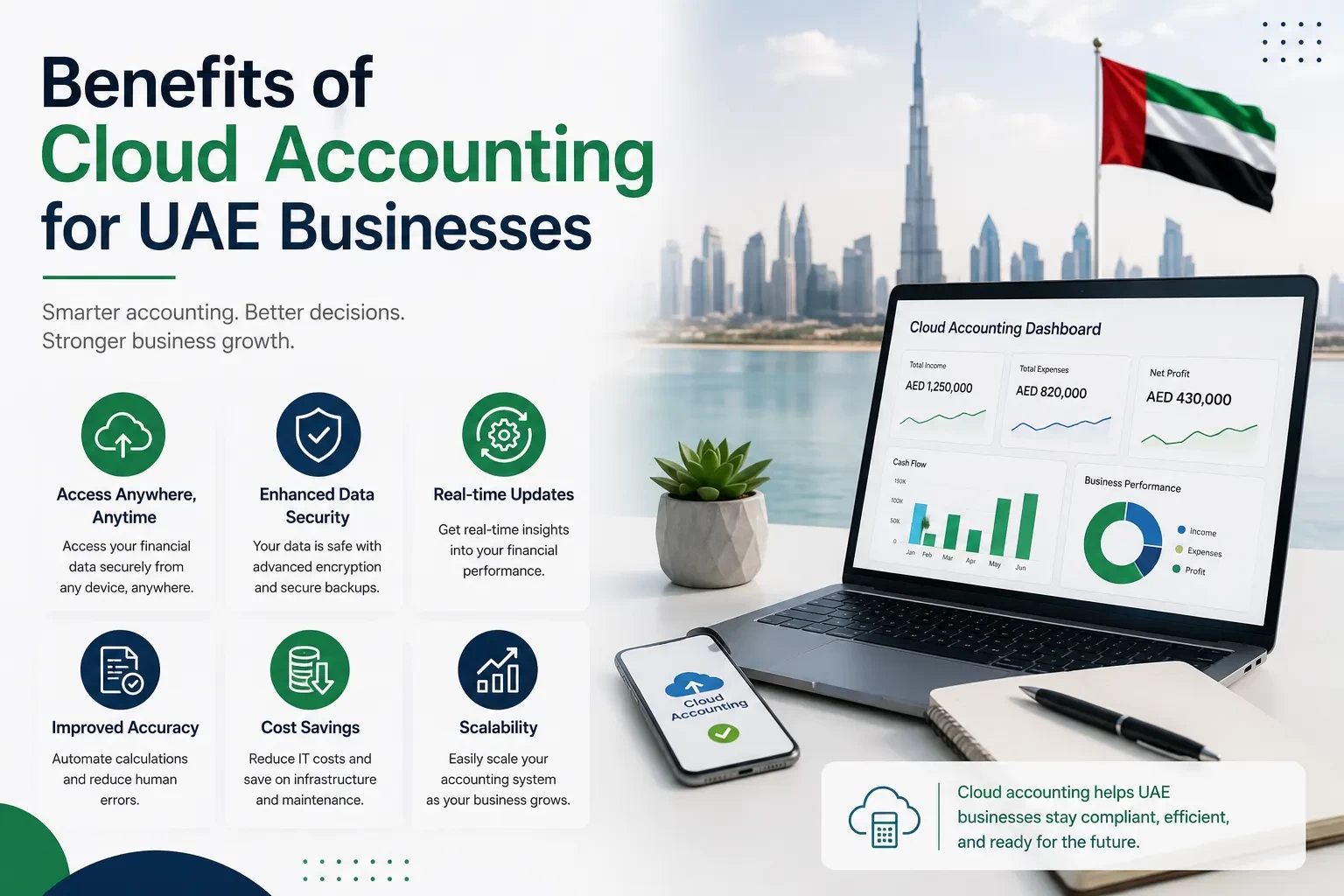
Businesses in the UAE are in a transition phase now. Digital transformation has taken over almost all aspects, and accounting is no different. It is proven that a more efficient financial management system can make businesses smarter and more productive. As a result of this effort, cloud accounting has now arrived on the scene for businesses of all sizes. Whether it is startups or large enterprises, cloud accounting has now replaced traditional accounting for various reasons.
Cloud accounting is more than just a technological upgrade but a tool that helps businesses with daily operations and compliance. Businesses can even make informed financial decisions that will change their fortunes through cloud accounting. This is indeed a much-needed change in the current Dubai business landscape now.
What is Cloud Accounting?
Cloud accounting is the process of leveraging online software to manage everything related to the finance department of an organization, including transactions and reporting. This surpasses traditional accounting by a fair distance, which uses desktop software or physical records. Cloud accounting protects your data on secure remote servers. Organizations can therefore access their financial information, no matter where they are.
Popular cloud accounting solutions help businesses with invoicing, expense tracking, payroll management nd financial reporting.
How Cloud Accounting Works
Cloud accounting is a subscription-based model where businesses log into their software through prominent browsers or relevant mobile apps. They don’t have to update their data manually, as automatic updation is one of the main features of cloud accounting. It also records transactions you make by categorizing them and storing them, respectively. Some of the key features of Cloud accounting are:
- Automated data entry
- Real-time, user-friendly financial dashboards
- Seamless integration with other tools
- Secure cloud storage and backup facility
This reduces any chances of human error, making financial management strong and reliable.
Key Benefits of Cloud Accounting for the UAE Businesses
Cloud accounting helps UAE businesses manage their finances in real time, improve accuracy, and stay compliant. Below are some of the key benefits.
Real-time Access to Financial Data
Timely access to financial activities and information to business owners and finance teams is one of the major advantages of cloud accounting. They can closely monitor cash flow, track expenses, and make reports accurately if they have a good device with a stable internet connection. The UAE’s market is fast changing, and cloud accounting is indeed a helpful tool.
Cost Efficiency
Cloud computing helps to avoid unnecessary costs. Whether it is hardware or software installations, businesses will no longer have to spend on them, as a monthly or annual subscription fee is a good enough cost-effective solution. They can also cut short the money they spend on manual labour by leveraging the software.
Enhanced Data Security
Data security is one of the primary concerns for businesses, especially in this era, where hackers are strong. Cloud accounting platforms use state-of-the-art encryption methodologies and multi-factor authentication so that your financial data remains secure and well-protected.
Traditional systems fail most of the time, as they are more prone to theft and hardware failure.
Scalability and Flexibility
Accounting needs of businesses will grow as they scale their operations. Cloud accounting systems support this growth immensely. They will help companies add features, users and smooth integrations without affecting their overall workflow whenever necessary.
This supports when the business is entering new markets or expanding its operations.
Improved Collaboration
Cloud accounting supports a strong relationship between business owners, accountants and auditors. Multiple users were given accessibility can access to the system simultaneously, making sure everyone is equally informed with the updated data. As some of the UAE businesses work with external accounting firms, this enhances the communication between them.
Automation and Accuracy
Manual data entry often worries businesses because of time consumption and errors. Cloud computing eradicates this issue efficiently by automating key processes, such as invoicing, tax calculations and bank activities. There will be no more mistakes for businesses while dealing with financial records, and they can be compliant during decision-making.
Compliance with the UAE Regulations
The UAE government is strict with corporate tax requirements, with a rise in tax percentage for companies that have profits exceeding a certain amount. Cloud accounting helps businesses to be compliant with these rules, so that no legal constraints affect their operations. These solutions provide accurate calculations, reports, and documents. By updating automatically, businesses can seamlessly align with the latest regulatory changes.
Cloud Commuting and VAT Compliance in the UAE
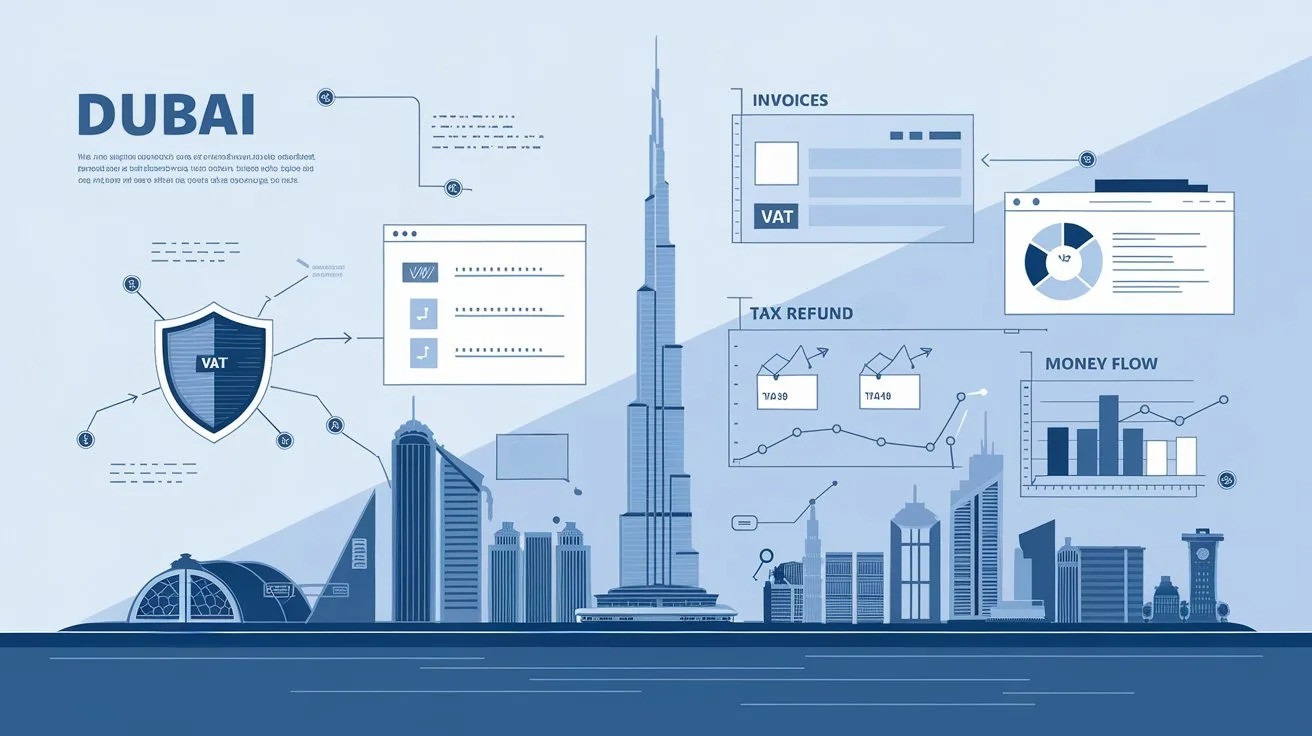
As mentioned earlier, the UAE government is strict with VAT compliance for businesses operating here, applying new rules to calculate it. Cloud computing plays a major role in simplifying VAT management by:
- Automatic calculation of VAT on transactions.
- Generating VAT-compliant invoices.
- Makes organizations audit-ready by generating accurate reports.
- Prepares VAT return reports.
This means businesses meet requirements that are set by the respective authority without further complications and complexities.
Additional Advantages of Cloud Accounting
Cloud accounting provides several other benefits beyond the core ones. Some of the major advantages are as follows:
- Remote Accessibility: Users don’t have to be inside the office to access the financial information. They can be anywhere in the world with different time zones.
- Integration Capabilities: Cloud accounting solutions can be easily integrated with various types of software, such as CRM, ERP and payroll systems for easy workflow and seamless operations.
- Environmentally Friendly: The reduced paperwork supports sustainable business practices. Organizations will also be free from piles of files.
- Emergency Recovery: Automatic backups make sure data can be protected during emergencies and unexpected events.
These features make cloud accounting a blessing for modern businesses in the UAE.
Empowering Businesses with Secure and Efficient Cloud Accounting
Cloud accounting is indeed a modern approach where financial data can be protected using the safest measures. It has made businesses effective and competitive. They can simplify financial management and be precise in decision-making. Adopting cloud-based solutions helps businesses in many facets in this competitive world.
The right financial partner will help you conquer new heights and challenges. Platforms like ours motivate you in this process. With the right support, businesses can ensure compliance and take a step towards financial growth with confidence.
Read to know more: UBO Registration in UAE: What Businesses Must Know in 2026
6ac77aa023fba.webp )












68808ee9b7955.webp )

688efa248e27b.webp )
6655d8f707761.jpg )


65e6cd1e0f3e4.jpg )
65e6c9c0d534d.jpg )
65e6c32a2f20b.jpg )


65bc8533a92ac.png )


658487f3c9300.jpg )


65696a21c9455.jpg )
655877fc6149a.jpg )


6545e20624322.jpg )
6545dcf88f88f.jpg )


651e319557077.jpg )


650ae7e3e4717.jpg )

64f18482943c2.jpg )




64c7ff385e235.jpg )

64708561abd47.jpg )